Les Amitiés particulières isn’t just a story about forbidden love in a Catholic boarding school. It’s a masterfully constructed exploration of innocence, manipulation, institutional power, and the tragic consequences of repression. Peyrefitte weaves together multiple narrative threads to create what André Gide recognized as a timeless work of literature. This overview will give you a sense of the novel’s scope and power without spoiling the reading experience you deserve to have yourself.
The Setting as Character
Before diving into the human drama, it’s crucial to understand that the Catholic boarding school itself functions as a central character in the novel. Drawing from the rigid world of 1920s French religious education we explored in our historical context, Peyrefitte creates an environment that’s both claustrophobic and beautiful, repressive and intellectually stimulating.
The school sits isolated in the mountains, cut off from the outside world. No day students dilute the intensity of this closed universe where boys live under constant supervision, following schedules dictated by bells and shaped by religious observance. This physical isolation becomes psychological pressure, creating an atmosphere where emotions intensify and relationships take on outsized importance.
What makes Peyrefitte’s portrayal so compelling is his refusal to paint the institution as simply evil. The priests aren’t cartoon villains. They’re complex men struggling with their own contradictions. The education is genuinely rigorous and intellectually stimulating. Boys study Greek and Latin, engage with classical literature, and develop sophisticated aesthetic sensibilities. The school produces cultured, educated young men. But it does so at a tremendous emotional cost.
The Central Relationship: Georges and Alexandre
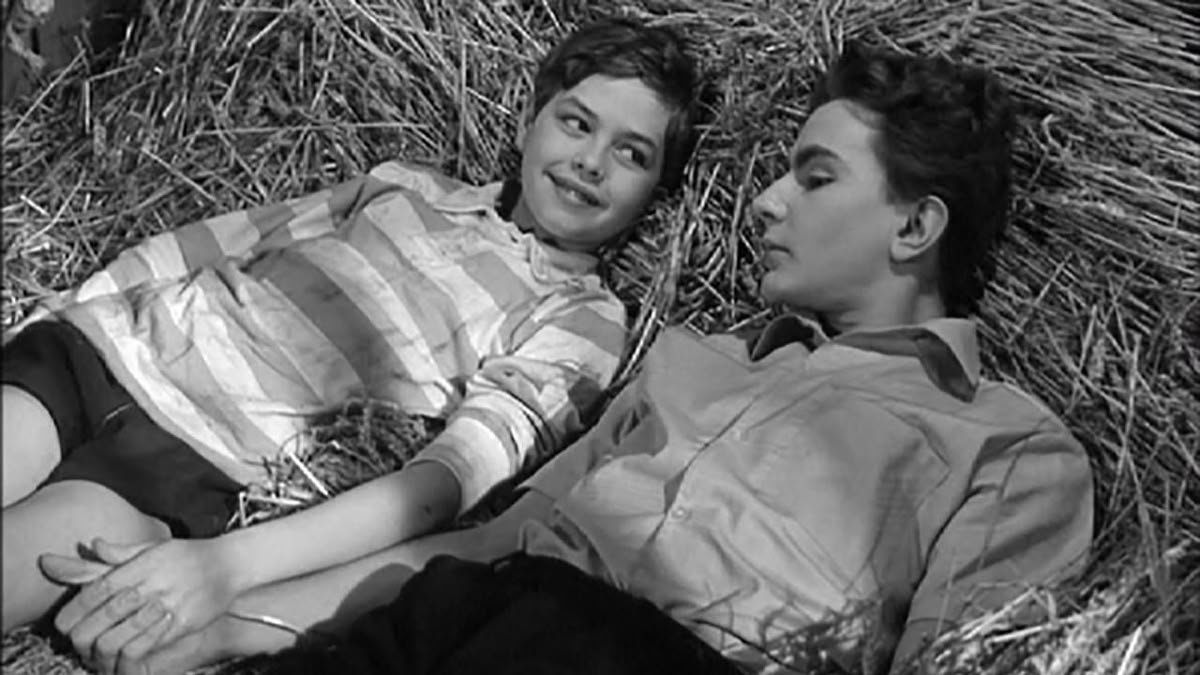
At the novel’s heart lies the relationship between fourteen-year-old Georges de Sarre and twelve-year-old Alexandre Motier. Georges arrives at the school as a newcomer, quickly learning its complex social dynamics and unwritten rules. He’s intelligent, manipulative, and driven by desires he doesn’t fully understand.
Alexandre, two years younger, possesses the kind of beauty that stops conversation. Peyrefitte describes him with the eye of someone who understood Greek sculpture. Alexandre embodies the classical ideal of youthful perfection. But he’s not just beautiful; he’s intelligent, sensitive, and emotionally vulnerable in ways that make him both irresistible and tragically fragile.
Their relationship develops gradually, moving from casual friendship toward something deeper and more dangerous. Peyrefitte handles this progression with remarkable subtlety. The relationship, while emotionally intense, remains chaste, consisting of exchanged letters, poetry, and stolen moments of tenderness. Yet in the school’s atmosphere, even these innocent expressions of affection become dangerous transgressions.
What makes their bond so compelling isn’t just its forbidden nature, but its genuine emotional authenticity. These aren’t predatory encounters or casual experiments. The feelings between Georges and Alexandre are real, deep, and transformative for both boys. Peyrefitte captures the intensity of adolescent emotion, when feelings seem to encompass the entire universe and relationships carry the weight of life and death.
The Web of Manipulation
One of the novel’s most sophisticated elements is its exploration of manipulation and power dynamics. Georges isn’t just a victim of institutional repression; he’s an active participant in the school’s complex social games. Early in the story, he orchestrates the expulsion of another student out of jealousy, demonstrating a capacity for calculated cruelty that makes him both sympathetic and troubling.
This pattern of manipulation extends throughout the novel. Georges uses his intelligence and understanding of the system to eliminate rivals and protect his relationship with Alexandre. But the priests, particularly Father Lauzon, are playing their own games of control and influence. The result is a web of competing manipulations where everyone believes they’re protecting someone else while actually serving their own psychological needs.
Peyrefitte’s genius lies in showing how institutional power shapes personal relationships. The boys learn to be manipulative because the system teaches them that direct honesty about their feelings is dangerous. The priests become controlling and devious because their positions require them to suppress and redirect natural human emotions. Everyone becomes complicit in a system that ultimately destroys what it claims to protect.
The Classical Contradiction
Running throughout the novel is a fascinating tension between classical and Christian values. The boys study Greek literature that celebrates male friendship and mentorship, learning about relationships that would be forbidden in their own lives. Father de Trennes, one of the more complex priest characters, speaks passionately about Greece as the birthplace of perfection, describing its landscapes and monuments with obvious longing.
This creates a profound philosophical contradiction at the school’s core. The curriculum celebrates a civilization that accepted and idealized the very relationships the institution forbids. Peyrefitte, with his deep knowledge of Greek culture, uses this tension to highlight the arbitrary nature of the school’s moral restrictions.
The boys themselves become aware of this contradiction. They study classical literature and culture while being told their own feelings are sinful. This disconnect between intellectual content and lived experience creates additional psychological pressure, making the boys question not just the rules but the entire moral framework of their world.
The Adult World of Hypocrisy
While the novel focuses on the boys’ experiences, Peyrefitte creates a richly detailed portrait of the adult world that governs them. The priests aren’t uniformly repressive monsters, they’re human beings struggling with their own desires and contradictions within an institutional framework that demands impossible standards.
Some priests, like Father de Trennes, seem to understand and even sympathize with the boys’ relationships while being bound by their positions to oppose them. Others, like Father Lauzon, genuinely believe they’re protecting the boys from moral corruption while being blind to their own emotional investments in these relationships.
This adult world operates according to unspoken rules and coded communications. The term “amitiés particulières” itself represents this coded language – a way of acknowledging forbidden relationships without directly naming them. The priests monitor for signs of these “particular friendships” while engaging in their own forms of emotional intimacy that walk carefully constructed lines.
Themes of Beauty and Tragedy
Peyrefitte infuses the novel with a deep aesthetic sensibility that elevates it beyond simple social criticism. His descriptions of the boys, particularly Alexandre, draw on classical traditions of beauty. But this isn’t mere prettiness – it’s beauty that carries philosophical and spiritual weight.
The school’s physical environment mirrors this aesthetic complexity. The buildings are beautiful, the mountain setting is inspiring, and the religious ceremonies have genuine grandeur. Even the academic program, with its emphasis on classical literature and languages, cultivates genuine appreciation for beauty and culture.
This makes the tragedy more profound. The destruction that comes isn’t the result of an obviously evil system crushing obviously innocent victims. Instead, it emerges from the collision between authentic beauty and institutional requirements, between genuine love and social expectations, between natural human emotions and artificial moral categories.
The Question of Innocence
One of the novel’s most sophisticated aspects is its treatment of innocence and knowledge. Alexandre’s haunting question to Georges – “Do you know the things we are not supposed to know?” – captures the central dilemma facing all the characters.
The boys exist in a state of enforced innocence that’s actually a form of ignorance. They’re forbidden to acknowledge or explore their own feelings, creating a psychological pressure that makes those feelings more intense and dangerous. The priests claim to be protecting innocence while actually creating the conditions that make genuine innocence impossible.
Peyrefitte suggests that true innocence might actually lie in acknowledging and accepting natural human emotions rather than suppressing them. The tragedy emerges not from the boys’ feelings but from a system that makes those feelings dangerous and shameful.
Literary Craftsmanship
What elevates Les Amitiés particulières above mere social criticism is Peyrefitte’s extraordinary literary skill. His prose combines classical elegance with psychological realism, creating a style that’s both beautiful and precise. He can describe a glance between boys with the same attention to detail he brings to describing a religious ceremony or a mountain landscape.
The novel’s structure builds tension gradually, moving from the establishment of relationships through various complications toward an inevitable tragic conclusion. Peyrefitte doesn’t rush toward sensational moments; instead, he develops his characters and themes with patience and subtlety that rewards careful readers.
His dialogue captures the way people actually speak while revealing the complex emotional undercurrents beneath surface conversations. The boys talk like real adolescents while the priests speak with the mixture of genuine concern and institutional authority that characterizes their positions.
Why This Story Endures
Over eighty years after its publication, Les Amitiés particulières continues to find new readers because it addresses fundamental questions about love, authority, and the price of repression. While the specific setting of a 1920s Catholic boarding school may seem distant, the emotional dynamics Peyrefitte explores remain painfully relevant.
The novel works on multiple levels: as a critique of institutional hypocrisy, as an exploration of adolescent sexuality, as a meditation on beauty and tragedy, and as a masterpiece of French literary craftsmanship. Readers come to it for different reasons but find themselves engaged by its combination of intellectual sophistication and emotional authenticity.
André Gide’s prediction that people would still be reading the book “in a hundred years” wasn’t just about its controversial subject matter. He recognized that Peyrefitte had created something that transcended its immediate social context to explore timeless aspects of human experience.
The Reading Experience Awaits
This overview can only hint at the richness of Peyrefitte’s achievement. The novel’s true power lies in its accumulation of small moments, subtle character interactions, and carefully developed emotional relationships that build toward its devastating conclusion. The beauty of the prose, the complexity of the characters, and the sophistication of the themes create a reading experience that stays with you long after you finish the book.
Les Amitiés particulières isn’t an easy read in the sense of being comfortable or reassuring. It’s a work that demands emotional engagement and intellectual attention. But for readers willing to enter Peyrefitte’s carefully constructed world, it offers rewards that few novels can match: a story that’s both historically specific and universally human, both beautiful and tragic, both controversial and deeply moral in its own terms.
The book awaits your discovery, ready to reveal why it has maintained its power to move and challenge readers across over eight decades of changing social attitudes and literary fashions.
Sources:
- Peyrefitte, Roger, Special Friendships, Translated by Edward Hyams. 1958.
- Preface by Alexandre de Villiers, Les amitiés particulières, Éditions Textes Gais (Paris), 2005.
- “Historical Context of Les Amitiés particulières” (previous article)